
About the Egyptian saw-scaled viper
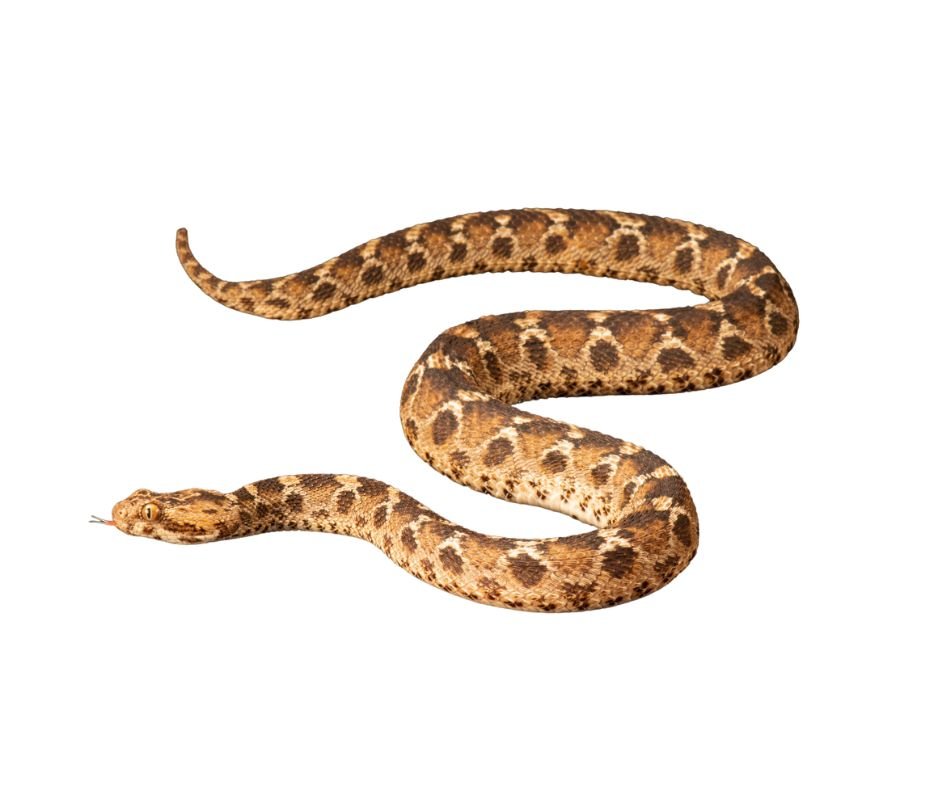
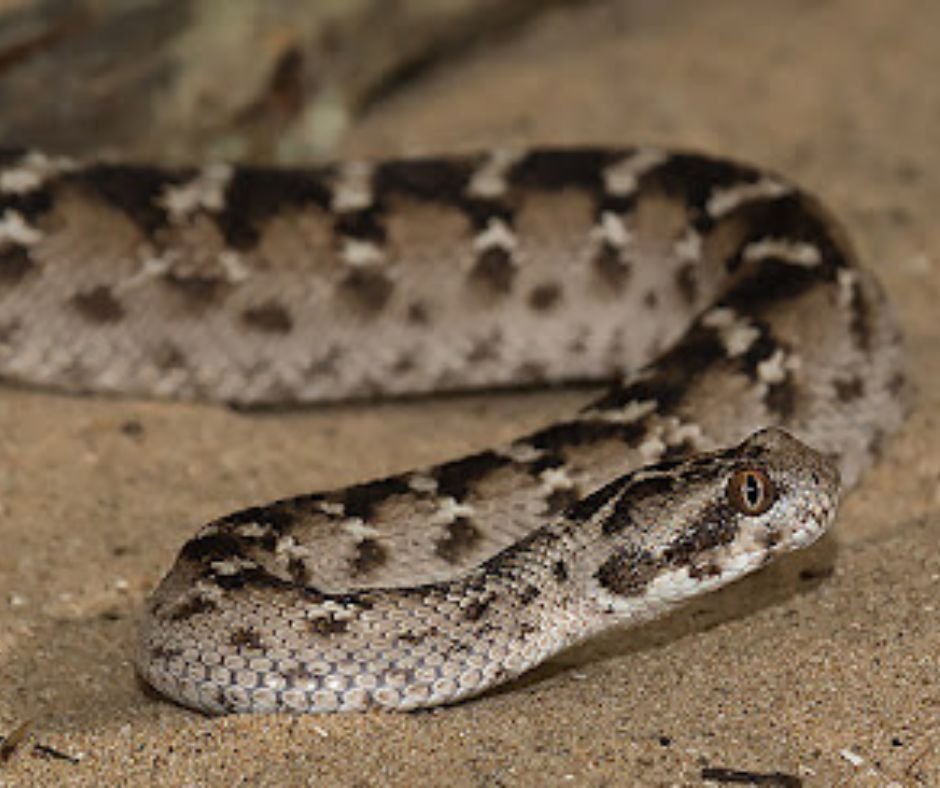
Echis pyramidum is a small but very dangerous viper from northern Egypt (it is absent from southern Egypt), north-east Africa and south-west Arabia. It was first described from Egypt, and it is also called the North-East African or Egyptian carpet viper.
Identification
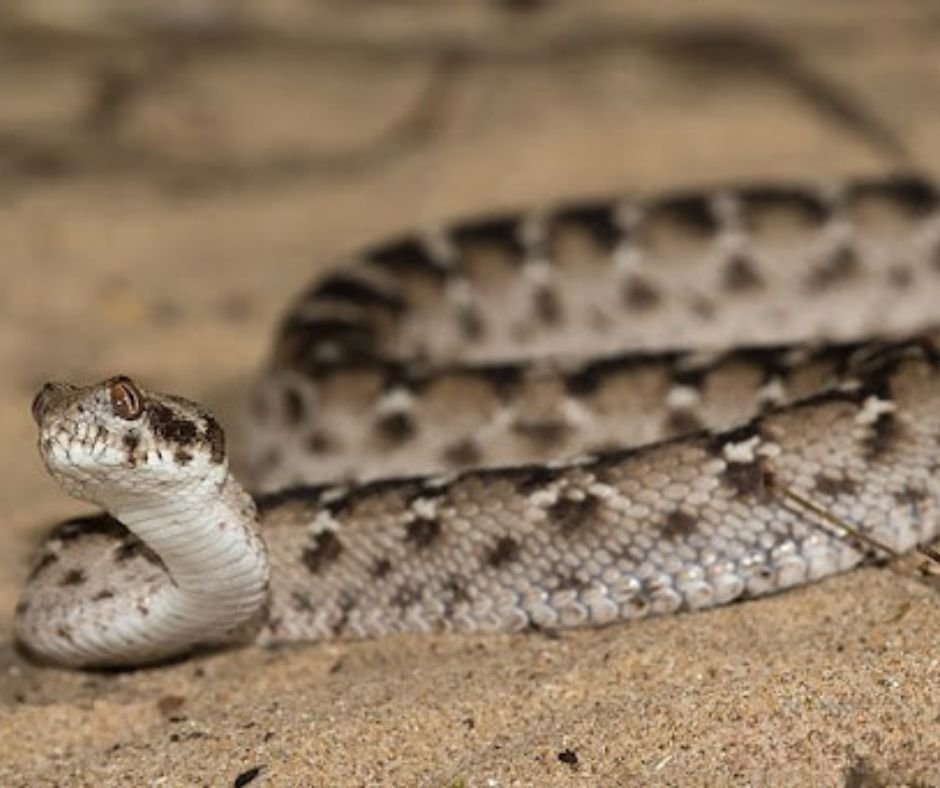
Usually 30–60 cm long, up to about 85 cm. It has a short, wide, pear-shaped head that is clearly wider than the neck, and the scales on its lower flanks stand out at about 45° with serrated keels, like a hacksaw blade. It has no rattle: when threatened it forms C-shaped coils and rubs these scales together to make a sizzling warning sound (stridulation).
Behaviour and diet
Mainly active at night, highly defensive and quick to strike. In the wild saw-scaled vipers eat insects, scorpions, centipedes, frogs and toads, lizards, other snakes, small mammals and birds. In captivity, feed dead prey from long tongs only.
Reproduction
Egg-laying (oviparous).
Venom
The venom mainly affects the blood and tissues and can stop the blood from clotting for days to weeks. Saw-scaled vipers cause some of the most snakebite cases and deaths in the world, so a written bite plan and access to a suitable antivenom are essential.
Conservation
IUCN Red List: Least Concern.
Care & safety guide: read our Egyptian saw-scaled viper guide (identification, venom, first aid, legal keeping) before you order.
Safety guide: Venomous vs non-venomous snakes in Egypt.


