
About the Egyptian cobra
Naja haje, the Egyptian cobra, is the large cobra of the Nile valley and one of the best-known snakes in Africa. Its range runs across North Africa and the Sahel and down into East Africa. In Egypt it lives along the Nile, in the Delta and Fayoum, and on the edges of farmland, where rodents and toads are easy to find.
Identification
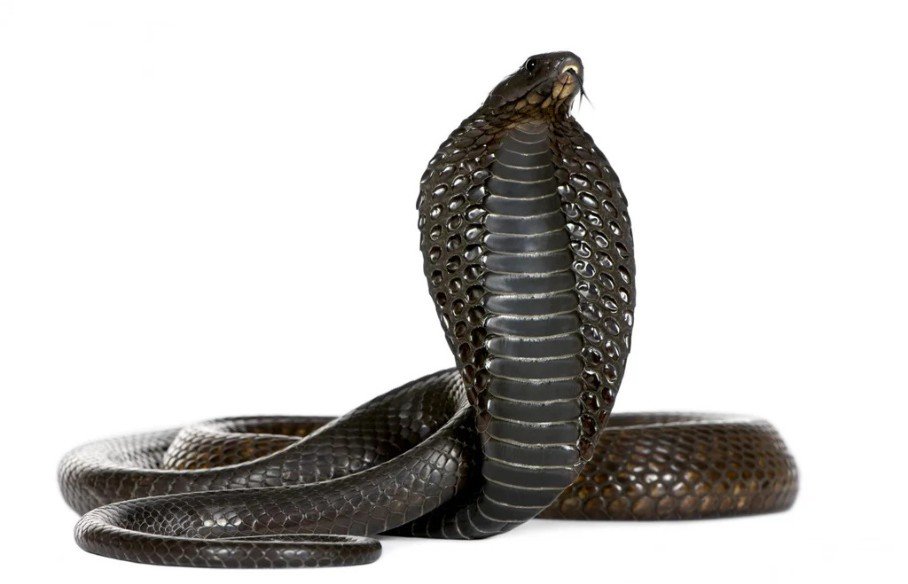
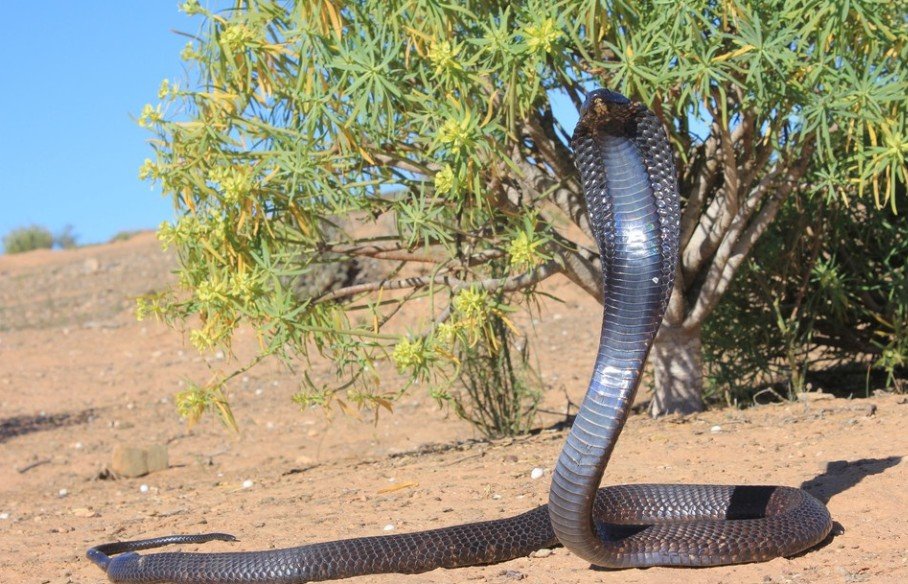
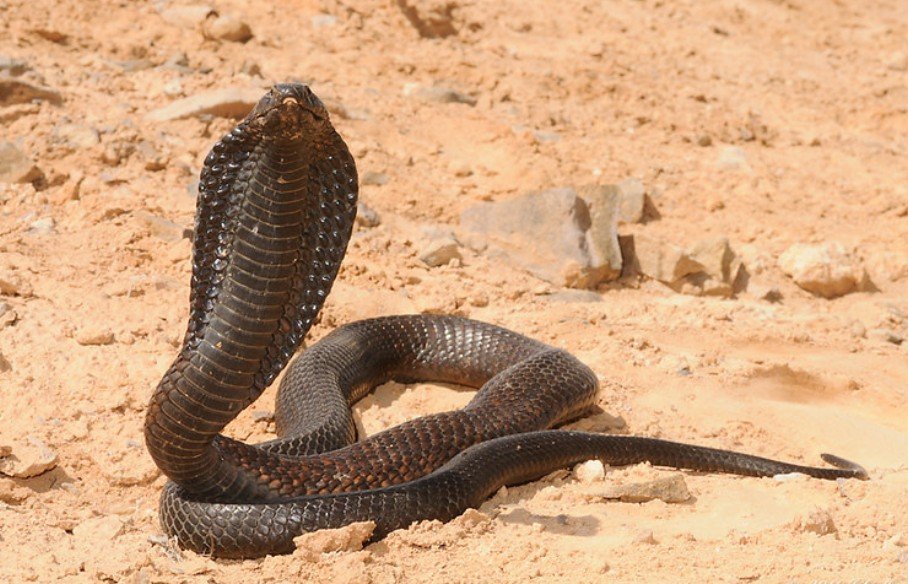
A big, heavy cobra. Most adults measure between 1 and 2 metres, and exceptional animals pass 2.5 m. The head is broad and flat with a large eye, and many individuals have a dark “tear” mark below it. Colour varies a lot: brown, yellowish, grey or almost black, sometimes with pale mottling. When alarmed it lifts the front of the body and spreads a wide hood. It does not spit venom.
Behaviour and diet
Mostly active from dusk into the night, though it often basks in the early morning. It lives on the ground but swims and climbs when it needs to. Wild cobras eat toads, rodents, birds and their eggs, lizards and other snakes. In captivity adults take dead rodents from long tongs.
Reproduction and lifespan
Egg-laying (oviparous), with clutches of roughly 8 to 30 eggs that hatch in about two months. Captive Egyptian cobras regularly live 20 years or more, so this is a long commitment.
Venom
The venom is mainly neurotoxic. A serious bite can stop breathing within hours and is a medical emergency that needs antivenom and hospital care. Nobody should keep this species without a written bite protocol and a known source of the right antivenom.
Housing in brief
A large, locked enclosure with a shift box or trap box so the snake can be shut away during cleaning. Warm end near 30–32°C, cooler end in the mid-20s, a big water bowl and solid hides. All handling is with hooks and tubes.
Conservation
IUCN Red List: Least Concern.
Who can order
We only quote for licensed private keepers, zoos, venom laboratories and research institutions that can show the permit their country requires for venomous reptiles. Please have it ready when you write to us. If private keeping of venomous snakes is not allowed where you live, we cannot ship there.
Export from Egypt and shipping
- CITES: Naja haje is not listed in the CITES appendices, so no CITES permit is involved.
- Our side: we prepare the Egyptian export documents and the veterinary health certificate for each shipment.
- Your side: the import licence and any dangerous-animal permit in your country. Check with your wildlife authority before you order, because the rules change.
- Transport: live-animal air cargo, packed to IATA Live Animals Regulations for venomous snakes, in a double container with clear venomous labelling.
- Price: quoted per shipment once we know the destination airport.
Email the species name (Naja haje), the quantity and your destination country to info@egyptian-reptiles.com, or read the shipping policy first.
Safety guide: Venomous vs non-venomous snakes in Egypt.
Care guide: read our Egyptian cobra care guide (licence, safety, housing, temperatures, diet) before you order.


